

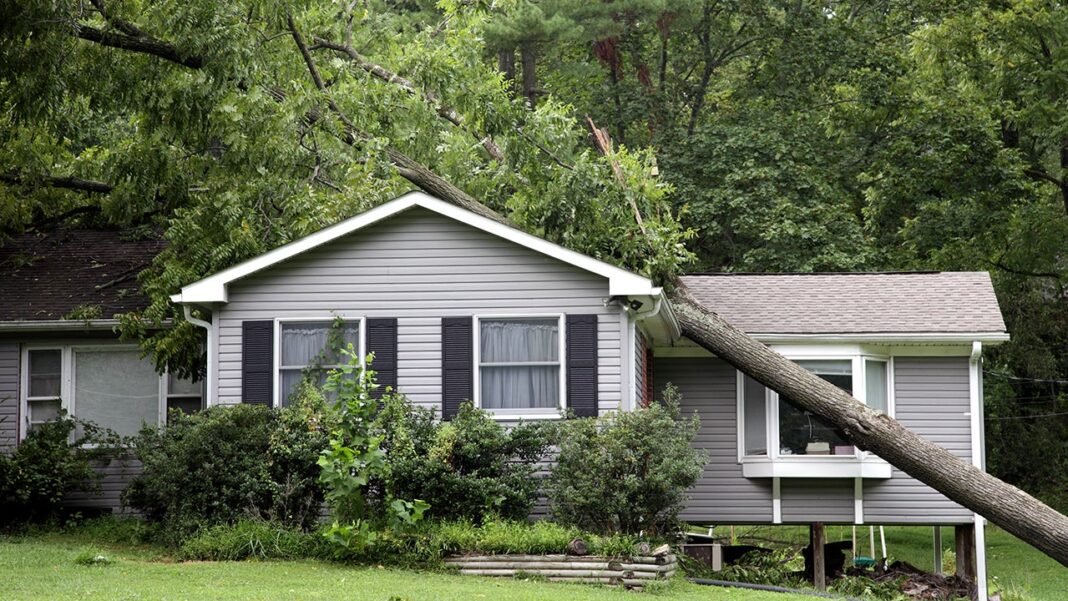
A falling tree can cause substantial damage to your home and property. Homeowners insurance will most certainly cover the damage caused by the tree, but you may be wondering if it would also cover the expense of removal. The answer is “It depends.”
Does homeowners insurance cover tree removal?
If a tree falls for a reason covered by your policy, such as severe winds or lightning, and causes damage to your home, garage, or other insured structures, your home insurance will most likely cover both the cost of removing the tree and the damage to your home.
There is normally a limit on how much your insurance company will pay to remove debris, including fallen trees. This limit is normally between $500 and $1,000.
When doesn’t home insurance cover tree removal?
Home insurance will not usually cover tree removal. Here are a few instances in which you are unlikely to receive coverage.
No damage to property
If a tree falls as a consequence of snow, wind, hail, or another covered event but does not cause damage to structures such as your home or fence, you will most likely be responsible for the expense of its removal.
A common exception is when a tree blocks your driveway or a wheelchair ramp. In this situation, your insurance may pay the cost of removal.
Preventive tree removal
Home insurance typically does not cover the cost of removing trees that do not represent an immediate threat to your home. This includes removing diseased or dying trees to avoid potential future damage. This is considered part of your obligation as a homeowner.
Events not covered by your policy
If a tree falls due to an incident that is not covered by your policy, such as a flood, earthquake, or mudslide, you may be required to pay for its removal out of pocket. It will most likely not be covered by insurance.

How much does tree removal cost?
Tree removal often costs between $200 and $2,000. The actual price is determined by the tree’s size, location, and task intricacy. For example, trees under 30 feet may cost $200 to $450 to remove, whereas trees above 80 feet can cost $1,000 to $2,000 or more, depending on whether a crane is required.
Even small trees can be costly to remove if they are located near buildings, electrical wires, or other structures. Similarly, trees with many branches and pest infestations can raise the overall cost.
Does home insurance cover damage caused by your neighbor’s tree?
If your neighbor’s tree falls on your property and causes damage to your home or another covered structure, such as a garage or fence, you will likely need to submit a claim with your own home insurance company. Your insurance should cover the damage and removal fees, even if the tree was on your neighbor’s property.
If your neighbor’s tree is dead, sick, or improperly maintained and falls on your property, your neighbor may be responsible for the damages and removal costs. However, demonstrating that your neighbor knew the tree posed a risk before it fell can be difficult. If you can prove that you alerted your neighbor about the tree’s condition before it fell, it will help your case. Proof might be a certified letter from a tree specialist indicating that the tree must be removed.
Does homeowners insurance cover tree damage to your neighbor’s property?
If a tree on your property falls and causes damage to your neighbor’s home, their insurance coverage should cover the repair costs. You should not have to file a claim with your own insurance.
However, if your neighbor informed you that the tree posed a threat to their property and they have documentation to back it up, you may be held liable for the removal. This may be considered negligence on your part.
What if a tree lands on your car?
In most cases, home insurance will not cover a tree falling on your car. Instead, this type of event is covered by your motor insurance policy. Comprehensive auto insurance should cover the damage caused by the falling tree. Comprehensive coverage covers damage caused by non-collision incidents such as storms, fallen trees, theft, and vandalism. If you do not have comprehensive coverage, you may be held accountable for the damage.
How to protect your home from tree damage
If you have trees on your property, here are some measures to safeguard your home from damage:
- Regularly examine your trees. Look for evidence of injury or disease, such as cracks, splits, or dead branches. If you see any problems, consider hiring a professional arborist to take care of them.
- Trim your trees. Regular pruning can help keep branches from falling and causing damage to your home. Remove any dead or diseased branches, then trim trees so that the remaining branches are safely away from power lines and other structures. You might wish to hire an arborist to cut branches near electrical wires.
- Choose the correct trees. When planting new trees, take careful consideration of their size and position. Ensure that the tree is suitable for the space and will not cause damage to your home or other structures as it develops.

